
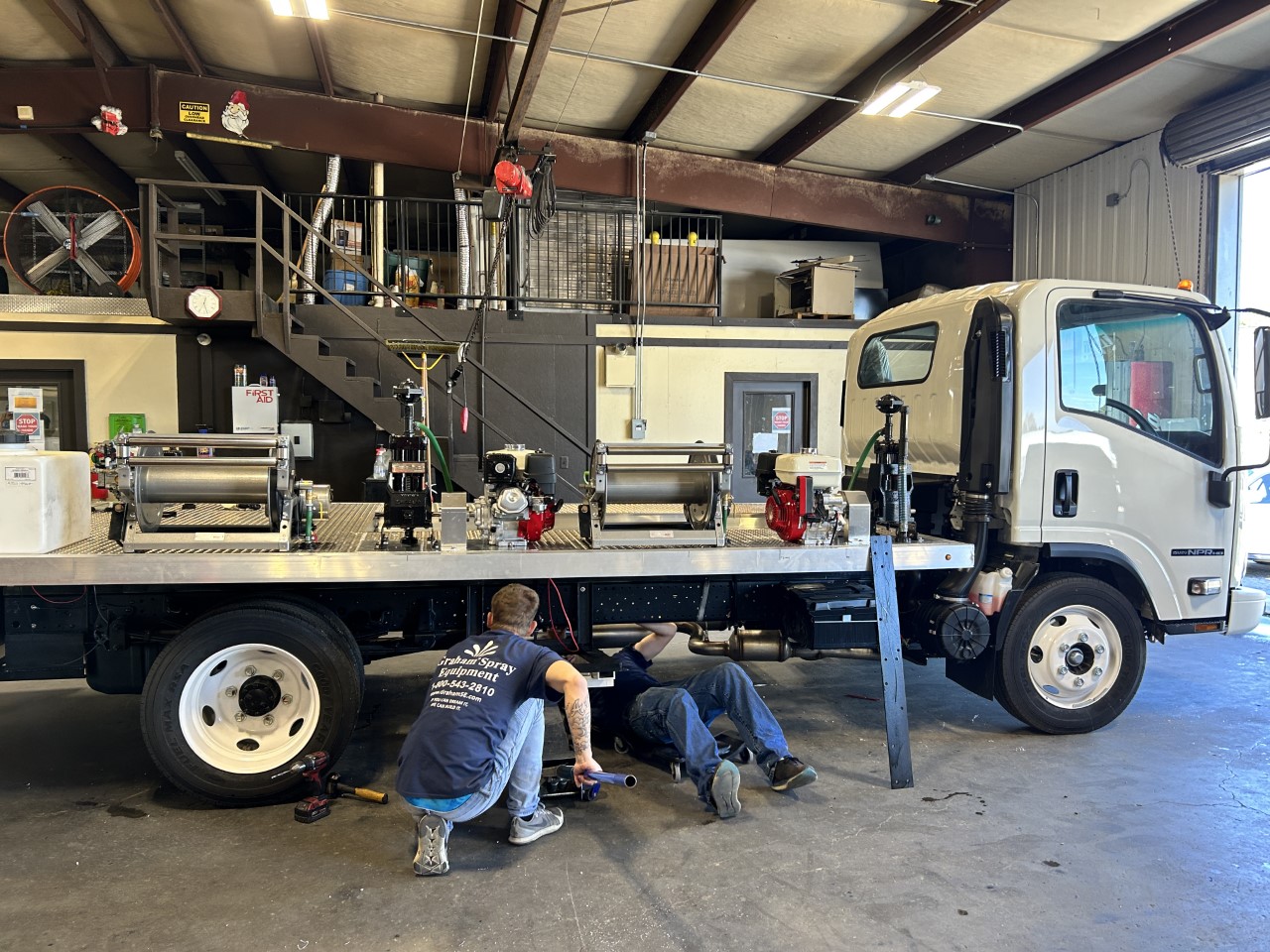
Most lawn care companies start with stock spray rigs because they’re affordable and accessible. But as routes fill up and the business grows, those rigs begin to limit productivity in ways that aren’t always obvious at first. The real question isn’t whether a growing company will outgrow stock rigs, it’s when. And the break‑even point for switching to a custom rig arrives much sooner than most owners expect.
Why Growing Companies Hit a Wall With Stock Rigs
Stock rigs are built to be universal, which means they’re not built for YOUR workflow, YOUR route density, or YOUR team’s pace. As a result, most companies experience 20–40% lower productivity than they could achieve with a purpose‑built system. That gap widens as the business scales, making the limitations of stock equipment more costly over time.
The Three Drivers of Break‑Even
The break‑even point for a custom rig is driven by three compounding advantages: productivity gains, labor efficiency, and reduced downtime. Together, these factors create a performance lift that stock rigs simply can’t match.
Productivity: The Biggest Factor
Companies that switch from stock to custom rigs typically see 25–50% more lawns completed per day. The difference comes from faster setup, smoother operation, and less physical strain on techs. A route that once consumed a full day can often be completed in significantly less time, opening the door to additional stops, tighter scheduling, or simply a more sustainable workload for the team.
Labor Efficiency: The Hidden Cost Saver
Labor is one of the largest expenses in lawn care, and even small improvements in efficiency have a major financial impact. When a custom rig allows a technician to complete the same route in 20–30% less time, the savings show up in reduced overtime, less windshield time, and lower turnover. These gains accumulate quietly but quickly, often becoming one of the biggest contributors to the break‑even point.
Downtime: The Silent Profit Killer
Stock rigs tend to require more troubleshooting and more frequent repairs. Custom rigs, especially those built with high‑quality components and thoughtful layouts, reduce downtime by 30–60%. Less downtime means more predictable schedules, fewer rescheduled customers, and a smoother day for technicians. Over the course of a season, this reliability becomes a major financial advantage.
So When Does a Custom Rig Pay for Itself?
Across hundreds of growing companies, the pattern is consistent: most businesses break even on a custom rig within 4–8 weeks of regular use. The combined effect of higher productivity, labor savings, and reduced downtime quickly overtakes the higher upfront cost. Even single‑truck operations see this payoff. For multi‑truck companies, the gains multiply across the fleet, often accelerating the break‑even point even further.
The Real Risk Isn’t Upgrading — It’s Waiting Too Long
The longer a company stays with stock rigs, the more hidden costs accumulate. Slower routes, higher labor expenses, frequent repairs, and tech burnout all chip away at profitability. These issues rarely appear on a balance sheet, but they absolutely show up in the bottom line and in a company’s ability to grow.
How to Know You’re at the Break‑Even Threshold
You’re likely ready for a custom rig if:
- Routes are consistently full
- Techs are working long days to keep up
- You’re adding a second or third truck
- Downtime is becoming a pattern
- You want to grow without adding more labor
If two or more of these apply, you’re already losing money by staying with stock rigs.
Final Takeaway
A custom Graham rig isn’t just a nicer piece of equipment — it’s a growth tool. For companies on the rise, the break‑even point is surprisingly fast, often just a few weeks. After that, the rig doesn’t just pay for itself; it fuels the next stage of your business. Reach out today to learn more.